How to Build a Sales Pipeline Tracking Workflow
Track sales opportunities with clear stages, next actions, owners, follow-up dates, and practical pipeline reviews. The goal is to build a process that your team can explain, maintain, and improve—not simply reproduce a product demonstration.
Before you begin: map the real work
Identify what starts the process, which people participate, what information each person needs, and what counts as complete. Write down the current sources of confusion. A useful workflow should reduce uncertainty about ownership, next actions, and deadlines. If the process itself is undefined, adding software usually makes the ambiguity more visible rather than fixing it.
Start with a small, representative sample of work. Include a routine item, an urgent item, an incomplete item, and one that is waiting on somebody else. These exceptions reveal whether your process can cope with actual team conditions.
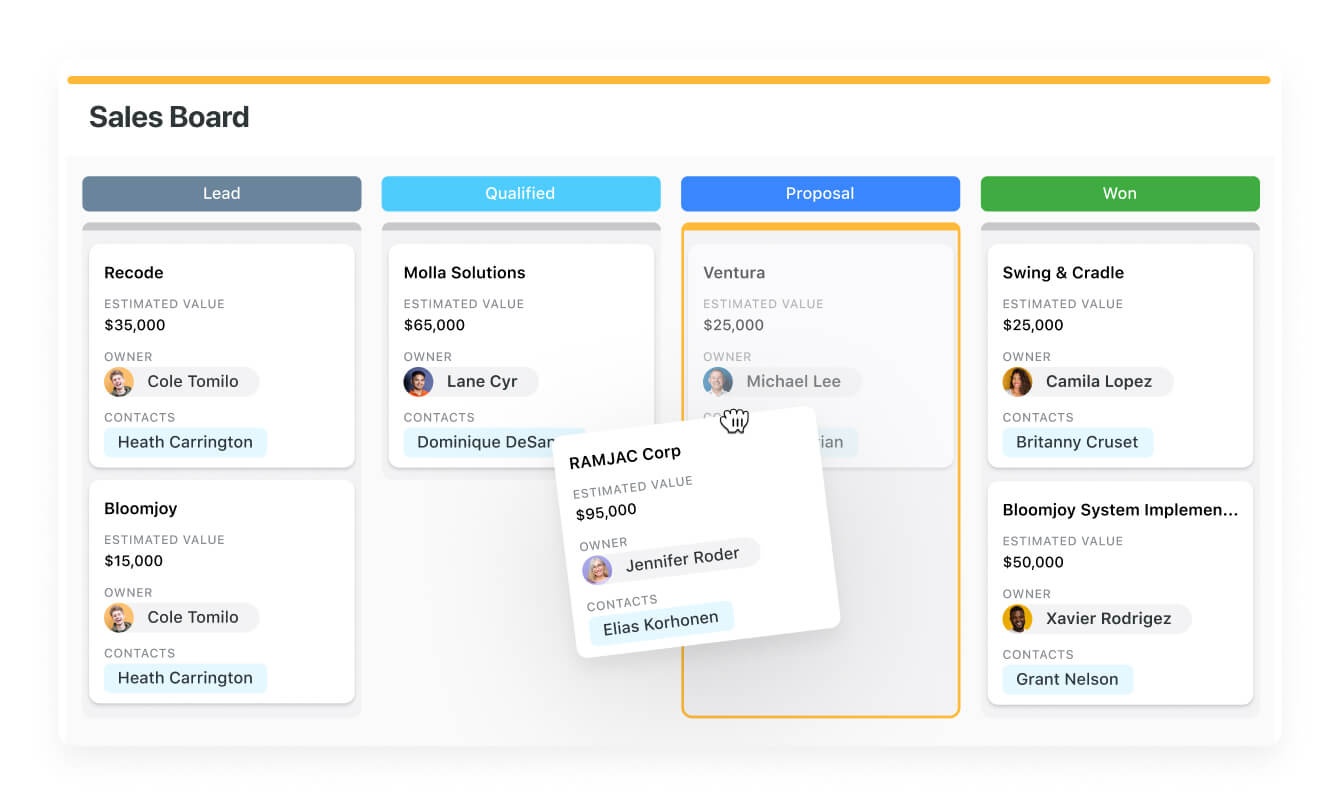
1. Define pipeline stages by evidence
Stages should reflect observable progress rather than optimistic guesses. A proposal stage should mean a proposal was actually delivered.
Example in practice
For a small services firm, use Qualified, Discovery, Proposal Sent, Negotiation, and Closed.
Implementation check
Write entry criteria for every stage and a clear lost-reason field. Write down the rule in language a new colleague could follow. Test it with a real record and verify the outcome before applying it to the entire team.
Why this matters: A consistent definition allows colleagues to coordinate without asking for clarification every time a record changes. It also makes later filtering and reporting more reliable. If the setup creates more manual maintenance than the work it replaces, simplify the process.
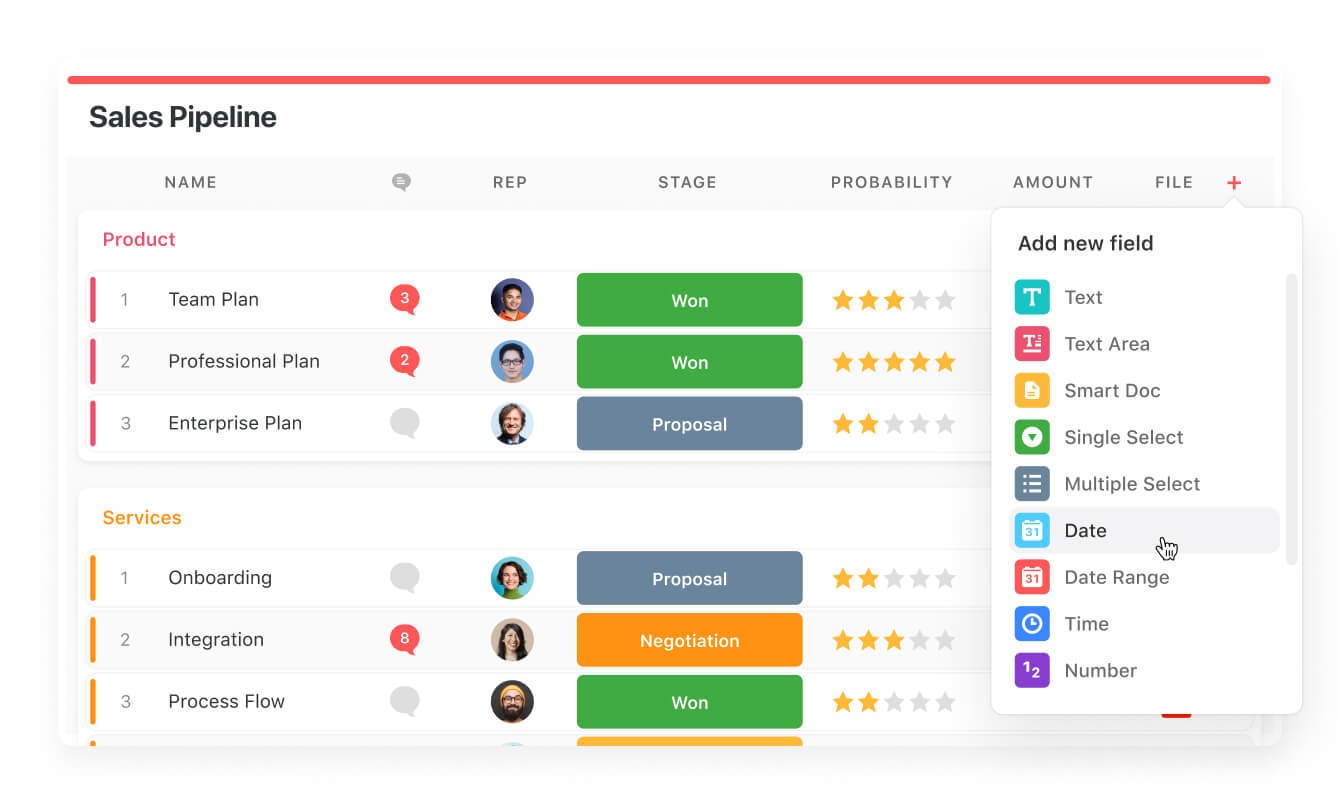
2. Make the next action unavoidable
Every active opportunity needs an owner, a next step, and a date. Without these, a pipeline becomes a historical list instead of an operational tool.
Example in practice
A discovery call may lead to a proposal draft assigned to the account owner by Friday.
Implementation check
Review opportunities without next actions before forecasting revenue. Write down the rule in language a new colleague could follow. Test it with a real record and verify the outcome before applying it to the entire team.
Why this matters: A consistent definition allows colleagues to coordinate without asking for clarification every time a record changes. It also makes later filtering and reporting more reliable. If the setup creates more manual maintenance than the work it replaces, simplify the process.
3. Create separate working views
Reps need follow-up queues and deal details; managers need stalled opportunities, stage distribution, and coverage. Different views should draw from the same records.
Example in practice
A rep filters opportunities due for contact this week while a manager scans aging deals.
Implementation check
Avoid duplicating deals for each team member. Write down the rule in language a new colleague could follow. Test it with a real record and verify the outcome before applying it to the entire team.
Why this matters: A consistent definition allows colleagues to coordinate without asking for clarification every time a record changes. It also makes later filtering and reporting more reliable. If the setup creates more manual maintenance than the work it replaces, simplify the process.
Watch the related workflow demonstration
The following video comes from the supplied SmartSuite training collection and illustrates a relevant interface or workflow. Use the demonstration to understand the controls, then adapt the underlying process to your team's needs. The video is not a substitute for checking current plan availability or testing your own configuration.
4. Run a disciplined pipeline review
Discuss changes, blockers, and next steps rather than reading every deal aloud. Use the same stage definitions across the team.
Example in practice
Focus on deals with no recent activity, missed follow-up dates, or unclear owners.
Implementation check
Document one action and one owner for every reviewed exception. Write down the rule in language a new colleague could follow. Test it with a real record and verify the outcome before applying it to the entire team.
Why this matters: A consistent definition allows colleagues to coordinate without asking for clarification every time a record changes. It also makes later filtering and reporting more reliable. If the setup creates more manual maintenance than the work it replaces, simplify the process.
5. Evaluate CRM-specific needs
A flexible workflow tool may not replace every specialized CRM feature. Verify email synchronization, activity logging, forecasting, integrations, and data access controls.
Example in practice
Test a representative sales cycle from lead intake through closed outcome before migrating.
Implementation check
Do not promise forecasting accuracy based solely on a dashboard. Write down the rule in language a new colleague could follow. Test it with a real record and verify the outcome before applying it to the entire team.
Why this matters: A consistent definition allows colleagues to coordinate without asking for clarification every time a record changes. It also makes later filtering and reporting more reliable. If the setup creates more manual maintenance than the work it replaces, simplify the process.
How to roll this out without disrupting the team
Run the first version with a limited group of users. Observe where they hesitate, which fields they leave empty, and what questions they ask. Document the current workflow before adding automation. Review the pilot after a short, defined period and keep the changes that demonstrably improve clarity or handoffs.
- Choose one owner: appoint somebody to maintain the workflow definitions and resolve inconsistent records.
- Agree on update timing: decide when users must record changes and what happens if they cannot.
- Review exceptions: regularly inspect blocked, overdue, or unassigned work instead of treating the dashboard as a passive report.
- Adjust one variable at a time: change a stage, field, or notification and check whether it reduces friction.
- Document the result: keep a short explanation of the workflow so new team members can follow it.
Common mistakes to avoid
Adding more fields than people can maintain
Every required field creates an update obligation. Remove fields that do not drive a decision, handoff, or report. If a field is frequently left blank, ask whether it is genuinely needed.
Building dashboards before the records are reliable
Charts and summary views can make inaccurate information look authoritative. Validate underlying records and field definitions first, then use reporting to identify exceptions.
Assuming software replaces accountability
Software can display ownership and route work, but it cannot decide who should be responsible. Assign clear decision rights and escalation paths before relying on automated notifications.
Software selection: when a flexible work platform may help
A structured work-management platform can be useful when the same records need multiple views, owners, and repeatable handoffs. SmartSuite is one platform to evaluate for these needs. Before choosing it, confirm the current capabilities, limits, permissions, integrations, and pricing against your requirements. The workflow principles above can be applied without SmartSuite.
Affiliate disclosure: The following recommendation uses a tracked affiliate link. WorkflowWise may earn a commission if you purchase after visiting the vendor, at no additional cost to you. Our guidance is independent and the educational steps do not depend on a purchase.
Evaluate SmartSuite against your requirements
Use the pilot checklist above while reviewing the product's current features and plan information.
Visit SmartSuite ↗Frequently asked questions
Should we start with a template?
A template can be a useful reference, but compare its fields, stages, and permissions with your actual process. Remove anything the team cannot explain or maintain.
How do we know whether the new workflow is better?
Choose observable outcomes before the pilot: fewer missing owners, fewer overdue handoffs, shorter time spent preparing updates, or fewer duplicate records. Avoid claiming improvement without baseline measurements.
When should we automate?
After the manual process has predictable inputs, owners, and outcomes. Automation applied to inconsistent records can accelerate mistakes and make exceptions harder to diagnose.